What Is A Vehicle Fire Suppression System?.
Heavy duty equipment fires can be devastating to an operation. A single downed machine can cost thousands of dollars a day in lost production. Fire is a real threat to operators, assets and productivity. To combat this risk, organizations across the globe are using fire suppression systems – the only reliable method to quickly and efficiently extinguish a fire when it does inevitably occur.
A fire suppression system is a safety accessory permanently mounted to a piece of heavy-duty mobile equipment to serve as protection in the event of a fire. Organizations consider these systems their first line of defense against total equipment loss, raised insurance rates, and the other impacts of fire.

Five Key Components of a Allguard Installed Vehicle Fire Suppression System.
Allguard has teamed up with Chubb to help Allguard customers protect their critical heavy equipment with the only Fire Suppression Systems designed specifically for heavy mobile equipment. Chubb F3N fire suppression systems are purpose-built to withstand the everyday abuse heavy duty machines experience; they’re rugged, reliable and easy to service.
- Fire-detecting tube or spot sensors
- A control panel to detect a fire and alert the operator
- Actuators discharge automatically or manually to activate system
- Tanks filled with fire-fighting agent
- A distribution network of tubes, hoses, and nozzles
To mitigate a fire as soon as it happens, fire-detecting linear wire or sensors are strategically placed around the machine. When the high heat of a fire penetrates the linear wire or is detected by the sensors, a signal is sent to the control panel in the vehicle cab.
The control panel alarms and alerts the driver to quickly evacuate the machine. At the same time, the panel automatically initiates the actuator, which discharges the fire-fighting agent inside the onboard tanks and sends it through a distribution network comprised of stainless steel tubing and/or hydraulic hosing. An actuator can also activate the system when pressed manually by the operator.
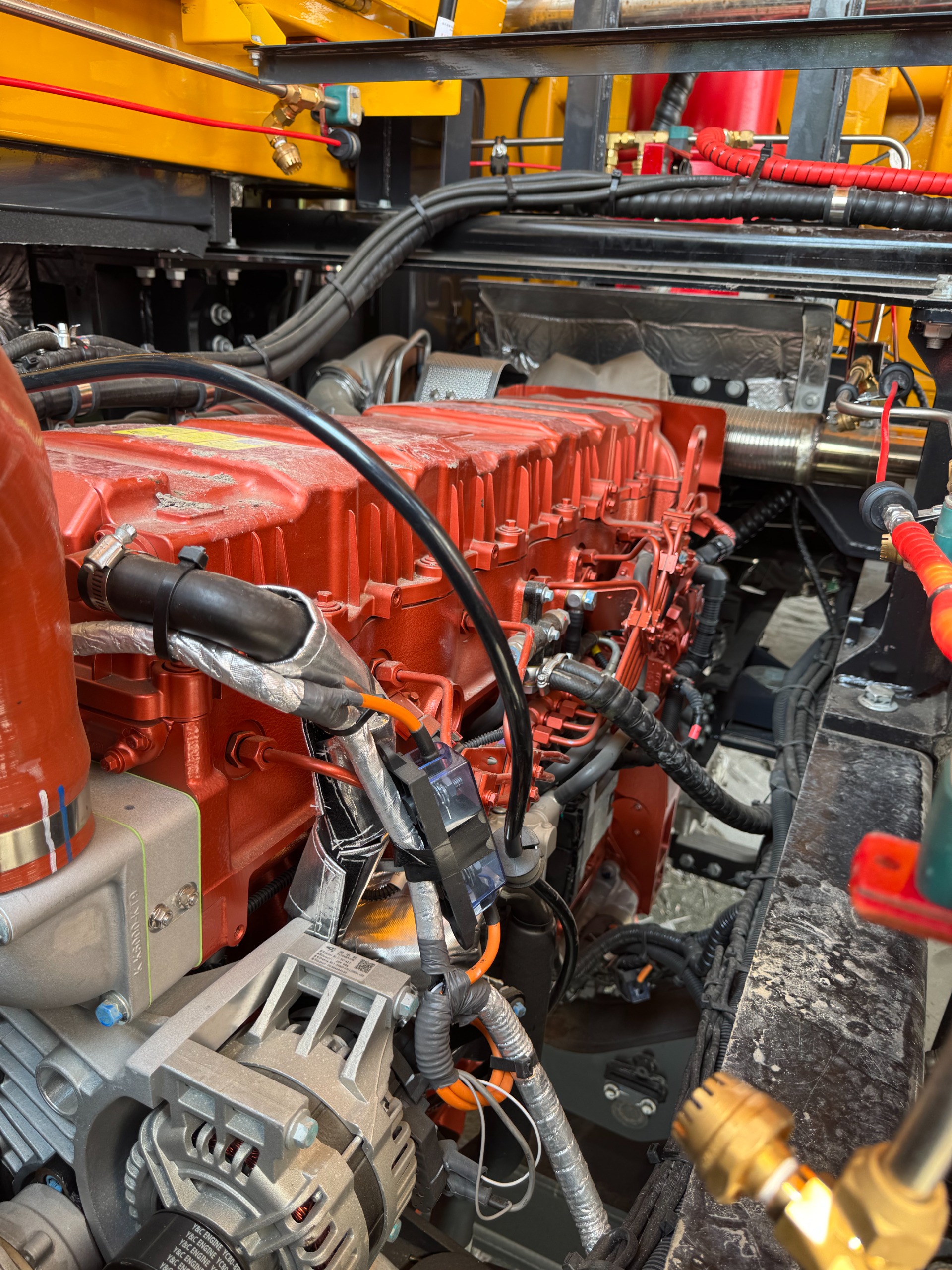
At the end of the distribution network, the agent is disbursed into the equipment’s protected areas via nozzles aimed at the machine’s high-hazard components, like turbochargers, starters, fuel filters, batteries, alternators, and transmissions to extinguish the fire quickly and efficiently.
Fire Risk Assessment.
The first step in selecting a fire suppression system is to conduct an on-site Fire Risk Assessment to analyze the unique fire risks of your machines, the safety concerns of your operators and the potential financial impact of a fire. This assessment allows us to provide you with a custom fire protection system to fit your unique needs.
Categories covered when conducting your Fire Risk Assessment include:
• Ignition sources – high temperature areas, electrical components, material being handled, welding/cutting
• Fuel sources – Class A, B or C materials
• Probability of fuel and ignition sources co-existing
• Personnel exposure risks
• Economic consequences of downtime
• Risk reduction
• Available fire suppression alternatives
• Selecting fire suppression system hardware